Haikal Hashmi remembers the Mohammadpur and Mirpur of his younger days as When we lived in Mirpur, I had a friend, Israfil, and we were avid kite flyers, addicted really. In kite flying season, the entire area became festive, and our days were spent preparing manja to get ready to fly the kites later in the afternoons.” In both areas, open air events were frequent, “always something going on, qawwali, wrestling, kite flying, mushaira. In those days, Muharram was a big neighborhood event, big marches, everyone participated at assembling tazias. It’s mainly a Shia event but others, for Sunnis too, significant, so there was participation from all.
People lined the streets to offer
supplicants doodh-er-sharbat” in memory of Imam Husyan who died of thirst in the deserts of Karbala. With halwa and fireworks, shab-e-barat was also an occasion for similar neighborhood wide celebrations. In their public celebration and community bonding, Hashmi drew parallels to Durga puja and diwali: the significance of chiseled shapes of pratima and tazia at puja and Muharram, the lights and fireworks of diwali and shab-e-barat.
Haikal Hashmi was born in Dhaka with his earliest memories of the city from Postogola in Puran Dhaka, Habib Oil Mill, and a mango orchard behind it. “We had to cross Loharpul (literally: iron culvert) to go to school in Gandaria. One day we pushed a rickshaw into the paddy field by the culvert in a bit of childhood jousting. Our landlord was this man we called Haji shaheb and I was friends with some of his children; one of the sons and I went fishing together. Haji shaheb’s wife regularly sent us food she cooked and always asked me, ‘Babu, you want some?’”
Both of Hashmi’s parents were from pre-Partitioned India. His father was one of nine siblings when he migrated to then East Pakistan. “Before her paralysis from a stroke, my mother was a great cook, her handi kabab was a specialty in our house. She followed my nani’s recipes.” Lot of the stories Hashmi heard of that side of the family were from his mother, Shams Ara. “My mother was from Muzaffarpur. She loved telling us about her dada, Darasat Hossain, a grand wooden entrance to their house with his name engraved on it. She spoke of those days in the present tense as if they weren’t really the past.” The past as analgesic what the present could not ameliorate: “When my nana passed away in 1978, we had no money to afford a trip to India.”
“We’re still a divided family” says Hashmi who traveled to Bihar for the first time in 1994. In Darbhanga at his father’s ancestral home, among a host of relatives he estimates was easily around a hundred who had come to meet him, Hashmi also met his elder sister (a daughter from his father’s first marriage) the first time. “I sensed a gaze fixed on me from across the room, of a woman leaned against a doorway, and I could immediately tell that was my sister.” As for his immediate family, with two sons in Canada, Hashmi is less sentimental though not without a touch of disappointment: “I’ll be the last Urdu speaker in my family.”
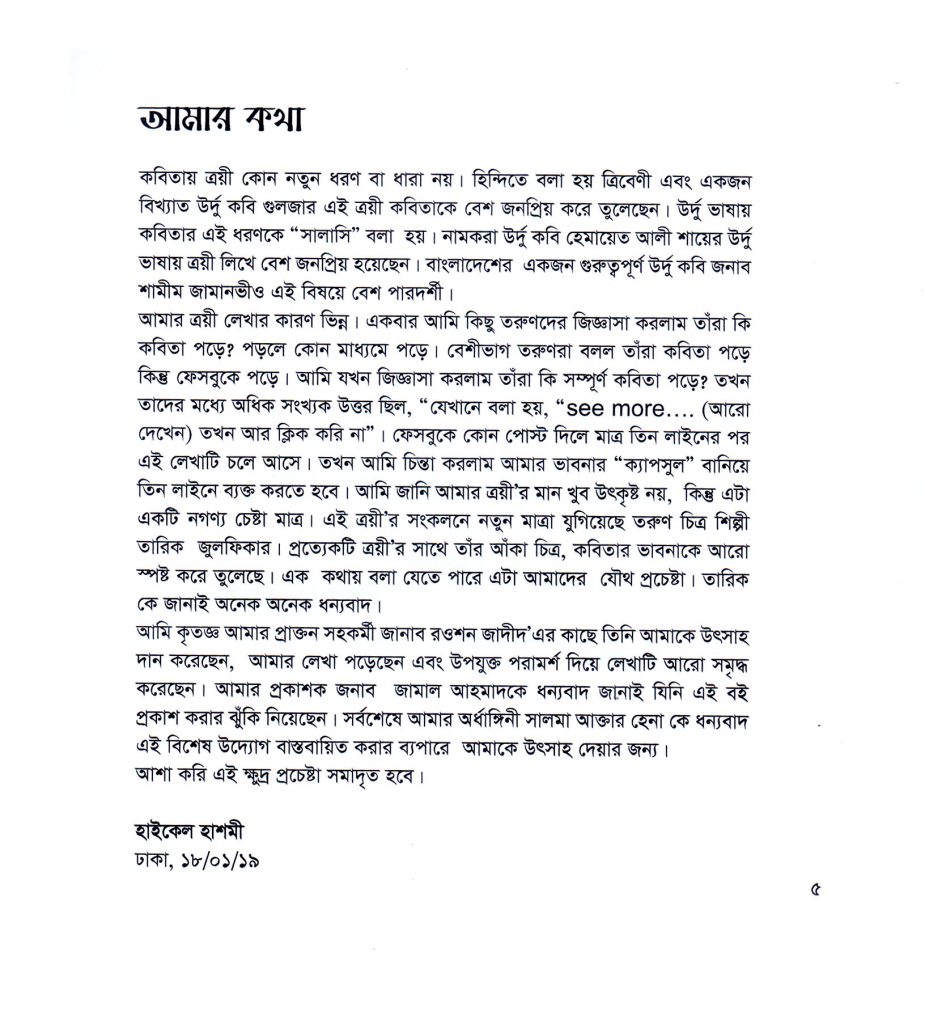
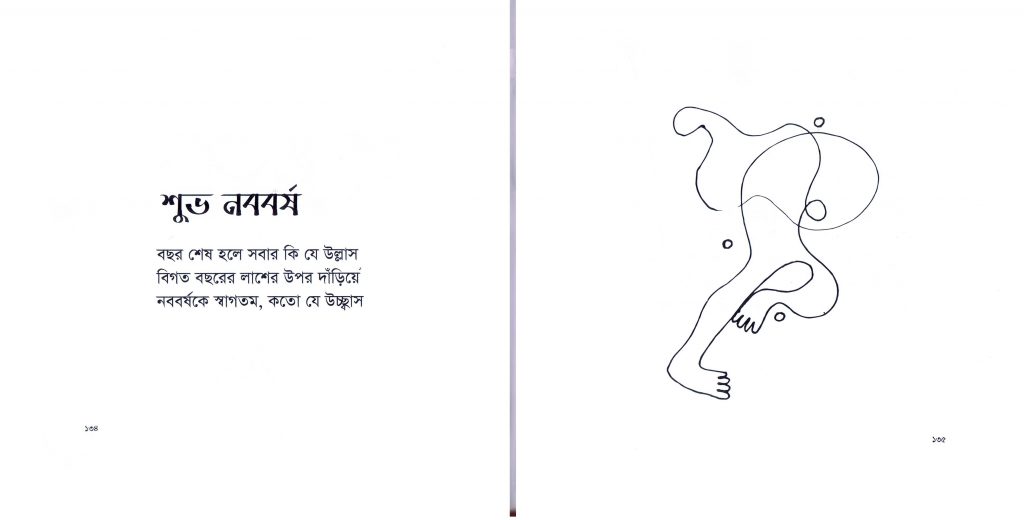
Named after the editor of Daily Al-Ahram, Mohamed Hassanein Haikal and son of the celebrated Urdu poet Naushad Noori, Haikal Hashmi is practiced in his duty towards Urdu, counting among his publications two volumes of short stories he translated to Bangla, stories by authors who remained in Bangladesh after 1971. These days he curates a prolific archive of his father’s works on social media while also posting some of his own works: “If I write in Bangla, I get requests for Urdu translations, and when I write in Urdu, people ask me to do Bangla versions too.”